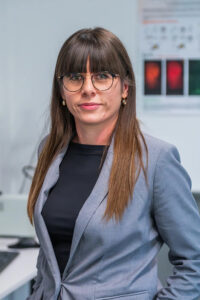
dr hab. inż. Aneta Lewkowicz, prof. UG
aneta.lewkowicz@ug.edu.pl
Head of the Forensic Science Department, Faculty of Law and Administration, University of Gdańsk
Professor at the University of Gdańsk and Head of the Department of Forensic Research at the Faculty of Law and Administration, with an interdisciplinary background spanning chemistry and physics, enabling the integration of these fields in research in unique ways. Actively involved in the university’s academic governance, serving on the Council of the Physical Sciences Discipline at the Faculty of Mathematics, Physics and Informatics, as well as on the Council of the Faculty of Law and Administration. Extensive experience includes leading and coordinating interdisciplinary research groups, managing prestigious grants, and holding patents on modern methods of trace evidence identification. Within the project, responsible for managing expert teams and designing innovative methodologies that apply the exact sciences to forensic science.
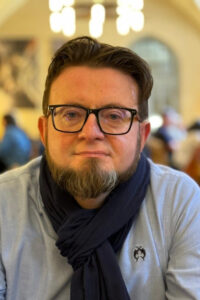
dr hab. Wojciech Zalewski, prof. UG
wojciech.zalewski@ug.edu.pl
Head of the Department of Substantive Criminal Law and Criminology, Faculty of Law and Administration, University of Gdańsk, Dean of the Faculty of Law and Administration
Wojciech Zalewski, PhD habil., is Professor of Criminal Law and Criminology and Dean of the Faculty of Law and Administration at the University of Gdańsk, Poland. He also heads the Department of Substantive Criminal Law and Criminology. His research focuses on criminal law, criminology, victimology, criminal policy, restorative justice, penal populism and the philosophy of punishment.
He is the author and editor of numerous publications, including monographs on restorative justice and criminal-policy responses to persistent offenders. His current research explores evidence-based criminology, the limits of punishment, penal abolitionism, the preventive turn in criminal justice, and the impact of artificial intelligence and new technologies on crime control and judicial decision-making.
Professor Zalewski has participated in numerous international research projects and conferences and has cooperated with judicial institutions, professional bodies and non-governmental organisations. He is a former member of the Board of Governors of the International Association of Law Schools and is active in international criminological and legal-academic networks.He also serves as an external examiner at the University of Mauritius in the fields of law and criminology, evaluating course examinations as well as bachelor’s and master’s dissertations.
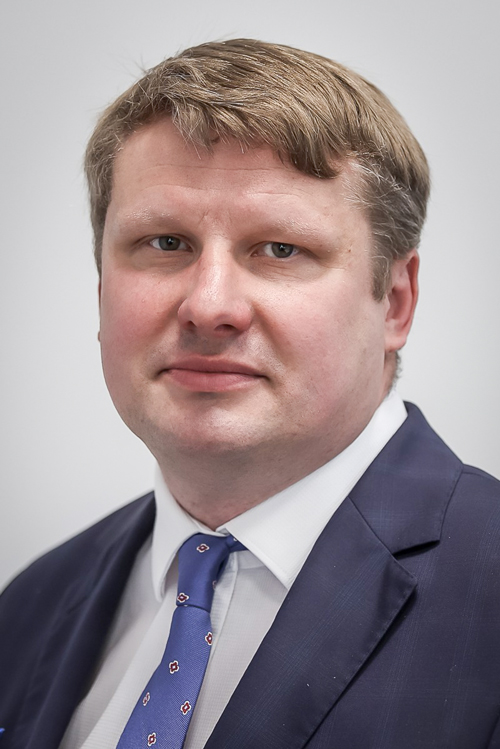 prof. dr hab. Michal Kaliszan
michal.kaliszan@gumed.edu.pl
Head of the Department of Forensic Medicine, Faculty of Medicine, Medical University of Gdańsk
is actually a head of the Department of Forensic Medicine, Medical University of Gdansk, Poland. His professional activity is focused on forensic pathology, including post mortem examination and vital injuries certification in crime victims. The main area of interest include also the issues regarding the estimation of the time of death and deaths from stab wounds. Actually he continues studies on estimation of the time since death based on eyeball temperature measurements, is an inventor of TOD-meter, device dedicated to calculate the time of death from post mortem eyeball temperature. He is also active in Medical Council in Gdańsk, where in the past he lead Medical Court and actually is engaged in ethical issues.
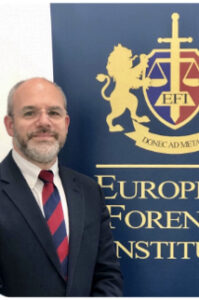 Andreas Melinato
a.melinato@eufor.eu
Head of Institution European Forensic Institute
Andreas Melinato is a Forensic Engineer, fire and explosion investigator, and Head of Institution at the European Forensic Institute (EFI) in Malta. With more than 25 years of experience, he specialises in forensic engineering, fire and explosion investigation, failure analysis, accident reconstruction, anti-counterfeiting. Expert-witness in Court with extensive professional cooperation with national and international law enforcement agencies, forensic consulting and investigative organisations, magistrates, and professional associations.He is an experienced lecturer in forensic engineering, fire and explosion investigation, forensic light sources, and anti-counterfeiting.He is a past President and Honorary Member of the European Association of Arson Investigators, European Chapter of the International Association of Arson Investigators, Vice-President of the European Association of Crime Analysts, and Associate Member of the ENFSI Fire and Explosion Investigation Working Group.
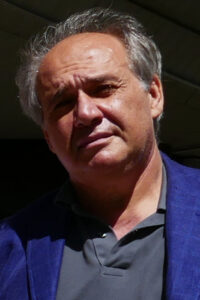
prof. Sabato D’Auria
sabato.dauria@cnr.it
Director of Research at the National Research Council of Italy
Dr. Sabato D’Auria is a Director of Research at the National Research Council of Italy (CNR). He served as the Director of the Institute of Food Science (ISA-CNR) in Avellino from October 2014 to January 2021, and the CNR Department of Biology, Agriculture, and Food Science (CNR-DiSBA) in Rome until 2025 coordinating the activities of nine CNR Institutes across Italy, overseeing more than 900 researchers, technologists, and technical-administrative staff. He is author of about 300 papers. He is also the inventor of multiple national and international patents in the field of biosensors. Dr. D’Auria has been responsible for many national and international research projects. Actually, he leads the Laboratory for Molecular Sensing at ISA-CNR. His main scientific interests are related to the identification and characterization of novel biomolecules to use as stable and specific probes for the design of advanced biosensors.
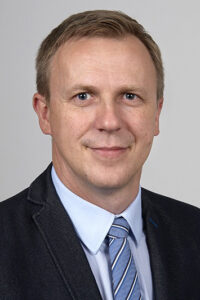
prof. dr hab. Dariusz Zuba
dzuba@ies.gov.pl
Director of the Institute of Forensic Research in Krakow
Dariusz Zuba is a professor of chemical sciences. He is the author of numerous publications in the field of forensic toxicology, particularly on new psychoactive substances. He actively participates in numerous activities of the European Network of Forensic Science Institutes (ENFSI), of which he served as a board member from 2016 to 2019. He is a member of the European Commission’s expert group on judicial training and a consultant for a United Nations Development Programme (UNDP) project in this area. He lectures at the Jagiellonian University and the National School of Judiciary and Public Prosecution and has also been involved in the training of judicial practitioners from other countries, including through CEPOL and TAIEX. From 2019 to 2021, he also served as a member of the World Anti-Doping Organization (WADA) Laboratory Advisory Group.
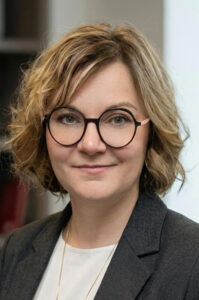
dr Marcelina Malinowska
marcelina.malinowska@ug.edu.pl
Laboratory of Human Genomics and Genetics, Department of Biology and Medical Genetics, Faculty of Biology, University of Gdańsk
is an Assistant Professor in the Department of Biology and Medical Genetics at the Faculty of Biology, University of Gdańsk, Poland. She holds a PhD in Biological Sciences and has more than ten years of research experience in human genetics, genomics, and molecular biology. Her research explores novel therapeutic strategies and the genetic and epigenetic mechanisms underlying health and disease. Her scientific interests include genetic and epigenetic profiling, genomic data analysis, and the application of advanced molecular biology techniques in biomedical research. She is also interested in the use of genetic and genomic analyses for diagnostic and human identification purposes.
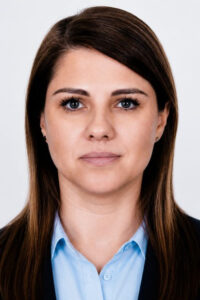
dr Daria Śmigiel-Kamińska
daria.smigiel-kaminska@phdstud.ug.edu.pl
Department of Forensic Science, Faculty of Law and Administration, University of Gdańsk
is a graduate of the University of Gdańsk and a forensic expert in the Chemistry Department of the Central Forensic Laboratory of the Police. Areas of expertise include forensic chemistry, with particular emphasis on narcotics and trace evidence analysis. Scientific activities include authorship and co-authorship of publications in forensic chemistry, particularly on the examination and identification of textile fibers and the application of instrumental analytical methods to forensic evidence. Active involvement in national and international scientific and expert cooperation includes participation in the activities and meetings of the European Network of Forensic Science Institutes (ENFSI). Professional experience combines extensive practical expertise in forensic casework with scientific research and teaching.
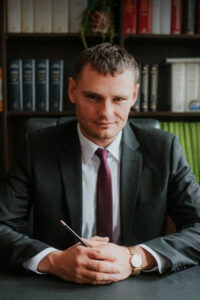
dr Adrian Wrocławski
adrian.wroclawski@ug.edu.pl
Department of Forensic Science, Faculty of Law and Administration, University of Gdańsk, Director of the Criminalistics Museum at the Faculty of Law and Administration
Dr. Adrian Wrocławski is a lawyer, an assistant professor in the Department of Forensic Research at the Faculty of Law and Administration at the University of Gdańsk, and the Director of the Museum of Criminalistics. In his legal practice, he specializes in criminal law and fiscal penal law, providing legal counsel to both individuals and business entities. He also serves as a court-appointed expert in firearms and ballistics for the Regional Court in Gdańsk. His academic work focuses on serial homicide, the use of dangerous objects, ballistics, and forensic medicine. He is the author of a monograph dedicated to the case of Paweł Tuchlin (known as „Scorpion”). He has appeared as an expert on British and Polish documentary series, such as “World’s Most Evil Killers” and “Kryminalne śledztwa PRL”, and co-developed the „Virtual Crime Scene” VR application for crime-scene investigation training in collaboration with Asseco Data Systems.
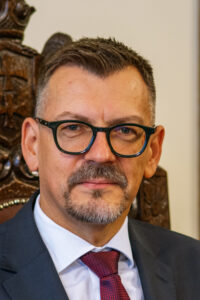
dr hab. Sławomir Steinborn, prof. UG
slawomir.steinborn@ug.edu.pl
Department of Criminal Procedure and Criminalistics, Faculty of Law and Administration.
is a professor of Criminal Procedure and European Criminal Law at the University of Gdańsk (Poland), head of the Department of Criminal Procedure Law and Criminalistics at the Faculty of Law and Administration. He did his research in Max Planck Institute for Foreign and International Criminal Law in Freiburg i. Br., Germany: from April 2008 till June 2009 as a fellow of Alexander von Humboldt Foundation and in August 2015 as a fellow of Max Planck Society. Since 2016 he serves as a judge at Court of Appeal in Gdansk, in March 2025 he was appointed President of the Court for a six-year term. In April 2024 he was nominated by the Prime Minister to the Commission of the Criminal Law Codification by the Polish Ministry of Justice (he was also member of this Commission in 2013-2016). He is author and co-author of over 150 scientific publications (in Polish, German and English), as well as author of more than 20 expertise’s prepared for the Polish Parliament, Polish Ministry of Justice, Polish Ministry of Foreign Affairs and Council of Europe. He has also been involved in numerous domestic and European research projects. He is member of Polish group of AIDP, member of the Scientific Committee of the AIDP (elected in June 2025) and member of European Criminal Policy Initiative. His fields of interest include criminal law and procedure, international cooperation in criminal matters, European criminal law (esp. harmonisation of criminal law and procedure, judicial cooperation) and criminal aspects of constitutional law.
dr hab. inż. Aneta Lewkowicz, prof. UG
aneta.lewkowicz@ug.edu.pl
Head of the Forensic Science Department, Faculty of Law and Administration, University of Gdańsk
Professor at the University of Gdańsk and Head of the Department of Forensic Research at the Faculty of Law and Administration, with an interdisciplinary background spanning chemistry and physics, enabling the integration of these fields in research in unique ways. Actively involved in the university’s academic governance, serving on the Council of the Physical Sciences Discipline at the Faculty of Mathematics, Physics and Informatics, as well as on the Council of the Faculty of Law and Administration. Extensive experience includes leading and coordinating interdisciplinary research groups, managing prestigious grants, and holding patents on modern methods of trace evidence identification. Within the project, responsible for managing expert teams and designing innovative methodologies that apply the exact sciences to forensic science.
dr hab. Wojciech Zalewski, prof. UG
wojciech.zalewski@ug.edu.pl
Head of the Department of Substantive Criminal Law and Criminology, Faculty of Law and Administration, University of Gdańsk, Dean of the Faculty of Law and Administration
Wojciech Zalewski, PhD habil., is Professor of Criminal Law and Criminology and Dean of the Faculty of Law and Administration at the University of Gdańsk, Poland. He also heads the Department of Substantive Criminal Law and Criminology. His research focuses on criminal law, criminology, victimology, criminal policy, restorative justice, penal populism and the philosophy of punishment.
He is the author and editor of numerous publications, including monographs on restorative justice and criminal-policy responses to persistent offenders. His current research explores evidence-based criminology, the limits of punishment, penal abolitionism, the preventive turn in criminal justice, and the impact of artificial intelligence and new technologies on crime control and judicial decision-making.
Professor Zalewski has participated in numerous international research projects and conferences and has cooperated with judicial institutions, professional bodies and non-governmental organisations. He is a former member of the Board of Governors of the International Association of Law Schools and is active in international criminological and legal-academic networks.He also serves as an external examiner at the University of Mauritius in the fields of law and criminology, evaluating course examinations as well as bachelor’s and master’s dissertations.
prof. dr hab. Michal Kaliszan
michal.kaliszan@gumed.edu.pl
Head of the Department of Forensic Medicine, Faculty of Medicine, Medical University of Gdańsk
is actually a head of the Department of Forensic Medicine, Medical University of Gdansk, Poland. His professional activity is focused on forensic pathology, including post mortem examination and vital injuries certification in crime victims. The main area of interest include also the issues regarding the estimation of the time of death and deaths from stab wounds. Actually he continues studies on estimation of the time since death based on eyeball temperature measurements, is an inventor of TOD-meter, device dedicated to calculate the time of death from post mortem eyeball temperature. He is also active in Medical Council in Gdańsk, where in the past he lead Medical Court and actually is engaged in ethical issues.
Andreas Melinato
a.melinato@eufor.eu
Head of Institution European Forensic Institute
Andreas Melinato is a Forensic Engineer, fire and explosion investigator, and Head of Institution at the European Forensic Institute (EFI) in Malta. With more than 25 years of experience, he specialises in forensic engineering, fire and explosion investigation, failure analysis, accident reconstruction, anti-counterfeiting. Expert-witness in Court with extensive professional cooperation with national and international law enforcement agencies, forensic consulting and investigative organisations, magistrates, and professional associations.He is an experienced lecturer in forensic engineering, fire and explosion investigation, forensic light sources, and anti-counterfeiting.He is a past President and Honorary Member of the European Association of Arson Investigators, European Chapter of the International Association of Arson Investigators, Vice-President of the European Association of Crime Analysts, and Associate Member of the ENFSI Fire and Explosion Investigation Working Group.
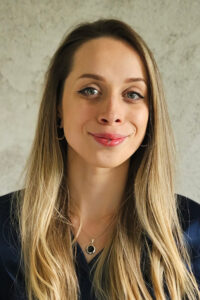
mgr Martyna Czarnomska
martyna.czarnomska@ug.edu.pl
Department of Forensic Science, Faculty of Law and Administration, University of Gdańsk
Doctoral candidate at the Doctoral School of the Faculty of Mathematics, Physics and Informatics at the University of Gdańsk (UG), currently pursuing research in forensic science at the Department of Forensic Research, Faculty of Law and Administration. Recipient of a NAWA scholarship, with proven international experience gained during research internships in the USA. Holds two master’s degrees, both focused on the application of scientific methodologies in forensic contexts. Research focuses on the use of molecular spectroscopy methods in combination with molecular biology to develop innovative procedures for forensic science applications, including laboratory protocol development for simulatanious DNA profiling, fingerprint visualization, and identification of substances in fingerprints.

dr inż. Małgorzata Nadolska-Dawidowska
malgorzata.nadolska-dawidowska@ug.edu.pl
Department of Forensic Science, Faculty of Law and Administration, University of Gdańsk
PhD in Materials Engineering, is a postdoctoral researcher at the University of Gdańsk, Poland. Her research focuses on functional carbon-based materials for biomedical and forensic applications, with particular expertise in hydrogel synthesis and the physicochemical characterization of functional materials. She is particularly interested in identifying and developing new materials for integrated forensic analysis, especially those enabling the complementary examination of fingerprints and touch DNA from the same trace.
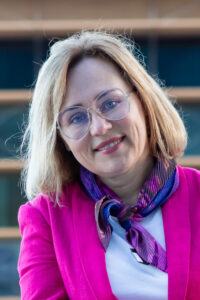 dr hab. Joanna Bednarz, prof. UG
Head of the Department of International Business, University of Gdańsk
is an Associate Professor at the Faculty of Economics at the University of Gdansk. She heads the Department of International Business. Her research interests include entrepreneurship, international business, consumption, and the behavior of young consumers.
She combines her academic work with her business experience. While working at FMCG companies, she participated in comprehensive new product launches – from identifying customer needs and analyzing market potential to product concept development, project profitability assessment, brand building, and intellectual property protection, and finally to promotional activities and product commercialization. She is involved in the activities of scientific associations: the Polish Economic Society in Gdansk (Head of the Scientific Council), the University of Gdansk Publishing House (member of the council), and the IESE Business School Alumni Association of the University of Navarra. She has extensive international experience collaborating with foreign universities: she is a member of the NICE Network, the coordinator of the Erasmus+ Program at the Faculty of Economics at the University of Gdansk, and a visiting professor at European universities.
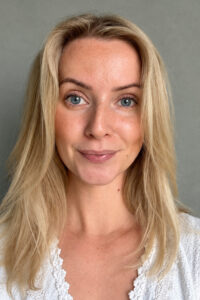
mgr inż. Martyna Kuczyńska
martyna.kuczynska@phdstud.ug.edu.pl
Doctoral School at the Faculty of Biology, University of Gdańsk
is a PhD candidate at the Doctoral School of the University of Gdańsk, affiliated with the Faculty of Biology and the Department of Biology and Medical Genetics. She holds a Bachelor of Engineering degree in Biotechnology from Wrocław University of Science and Technology and a Master’s degree in Medical Biology, with a specialization in Molecular Diagnostics, from the University of Gdańsk.
Her scientific profile combines expertise in molecular biology, immunology, and molecular diagnostics, with a particular interest in the development and application of advanced methods for the analysis of biological material. She is currently a research team member in the OPUS 29 project “Molecular Investigation of Touch Traces: An Innovative Approach to DNA and Fingerprint Analysis (Jigsaw ID) in the Context of Mass Fatality Identification and Forensic Thanatology,” led by PhD Aneta Lewkowicz at the University of Gdańsk.
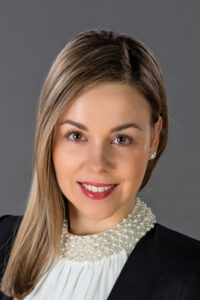 dr Joanna Koczur
joanna.koczur@us.edu.pl
Institute of Legal Sciences, Faculty of Law and Administration, University of Silesia
Doctor of Law, forensic scientist, and academic lecturer. She is a member of the Polish Forensic Science Society and an Assistant Professor in the Department of Forensic Science at the Faculty of Law and Administration, University of Silesia, where she teaches courses on Logic for Lawyers, Psychology of Testimony and Statements, and Forensic Science. Her research interests focus on investigative psychology, the law of evidence, expert evidence analysis, forensic defense tactics, and modern, interdisciplinary methods of personal identification, including the identification of mass disaster victims.
 Emilia Gruszczyńska
emilia.gruszczynska@phdstud.ug.edu.pl
University of Gdańsk
PhD student at the Doctoral School of the Faculty of Mathematics, Physics and Informatics at the University of Gdańsk. She holds a Bachelor’s degree in Biology from the Jagiellonian University (Department of Anthropology) and a Master’s degree in Criminology (specialization in Forensic Science) from the University of Gdańsk. She conducts research at the Department of Forensic Research, Faculty of Law and Administration, University of Gdańsk. Her research focuses on the analysis of biological material from deceased individuals, with particular interest in fluorescent biomarkers and their potential forensic applications. She is currently Principal Investigator of the NCN-funded PRELUDIUM project “Analysis of Förster Resonance Energy Transfer (FRET) between fluorescently active components present in sweat-fat substance and postmortem secretion as a potential tool for estimating the time of death.
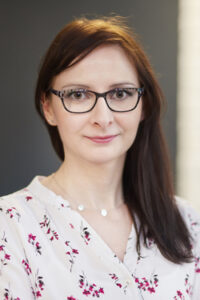 dr Agnieszka Tuszkowska
agnieszka.tuszkowska@ug.edu.pl
Faculty of Law and Administration, University of Gdańsk
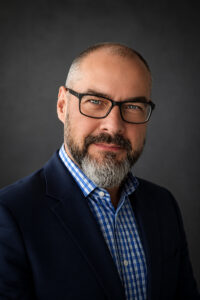 Sławomir Dajkowski
slawomir.dajkowski@ug.edu.pl
Faculty of Law and Administration, University of Gdańsk

Michelle Yew
m.yew@eufor.eu
Director and General Manager, European Forensic Institute
Michelle is the General Manager at the European Forensic Institute, one of the conference sponsors. A Chartered Accountant and London School of Economics graduate, she brings international experience in education, finance, governance and professional training, with a strong commitment to advancing learning and collaboration within the forensic and investigative sciences community.
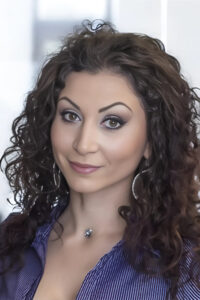
Claire Hadjikou
c.hadjikou@eufor.eu
Director, Centre of Excellence in Criminology and Forensic Psychology, European Forensic Institute
is a forensic psychology and criminology researcher and academic with over two decades of experience in forensic psychology, criminology, higher education, and applied forensic research. She is Director of Research at Evidentia Institute, where she leads interdisciplinary research in forensic psychology, criminology, and investigative science, and Director of the Centre of Excellence in Criminology and Forensic Psychology at the European Forensic Institute, where she leads teaching and programme development and contributes to the professional training of future forensic practitioners. Her professional experience includes research with the Federal Bureau of Investigation (FBI) Behavioral Science Unit, as well as extensive teaching and academic experience in forensic psychology, criminology, investigative science, and behavioural analysis.
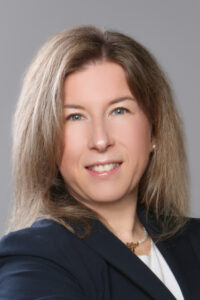 dr Magdalena Wrana
magdalena.wrana@rzym.pan.pl
PAS Scientific Centre in Rome – Director
holds a degree in Italian Studies from the Faculty of Philology at the Jagiellonian University. In 2011, she defended her doctoral thesis with distinction – a work focused on Angelo Maria Durini, the Apostolic Nuncio to Poland during the Enlightenment – which was awarded the “Premio Fondazione Sbranti” by the University of Pisa in 2014 as the best doctoral thesis in the field of Polish-Italian cultural relations. She has been professionally affiliated with the Jagiellonian University since 2008, serving as an Assistant Professor and, during the most recent term, as a member of the Academic Senate. She has also worked as a visiting researcher and visiting professor at numerous Italian universities. She is a member of both national and international academic associations dedicated to Italian studies. Concurrently, from 2016 to 2026, she was associated with the Honorary Consulate of Italy – initially as an assistant to the Consul and, from 2019, as the office manager – working closely with the Embassy of Italy in Poland, including in the areas of scientific and cultural diplomacy. She is an accomplished Italian conference interpreter; in 2023, she served as the personal interpreter for the President of the Italian Republic, Sergio Mattarella, during his state visit to Poland. In 2025, the President of the Italian Republic awarded her the Order of the Star of Italy (Officer rank) in recognition of her contributions to fostering Polish-Italian relations.
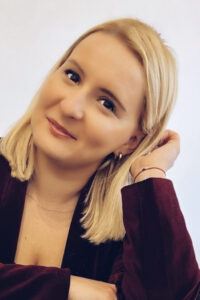
dr Małgorzata Fijał
malgorzata.fijal@rzym.pan.pl
PAS Scientific Centre in Rome
Dr Małgorzata Maria Fijał is a researcher and European affairs expert with experience in EU-funded Horizon Europe research projects, scientific dissemination, and Polish-Italian relations. She holds a PhD in Humanities, specialising in contemporary Italy, regional movements, and identity politics. Her professional experience includes research projects, scientific dissemination, and the development of Polish-Italian academic and institutional cooperation. As an expert at the Scientific Centre of the Polish Academy of Sciences (PAN) in Rome, she works on scientific and cultural diplomacy and supports cooperation between Polish and Italian research institutions.
Katarzyna Ellert
katarzyna.ellert@rzym.pan.pl
PAS Scientific Centre in Rome