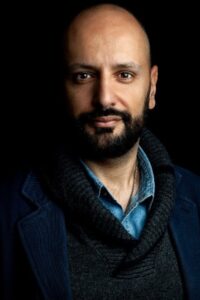
Pier Matteo Barone
p.barone@aur.edu
Associate Professor of Archaeology The American University of Rome
is Associate Professor of Archaeology at The American University of Rome and a forensic geoarchaeologist specializing in the application of archaeological and geoscientific methods to crime-scene investigation and searches for missing persons. His work integrates forensic archaeology, ground-penetrating radar and other geophysical methods, GIS, UAV and satellite remote sensing, photogrammetry, and digital workflows for the detection, documentation, and interpretation of buried or otherwise concealed evidence. He is Chair of the Forensic Archaeology subgroup within the ENFSI Scene of Crime Working Group and contributes to international research, training, and operational activities in forensic geoscience. His current interests include multimodal data integration, remote sensing for search prioritization, quality assurance in forensic archaeology, and the responsible use of AI-assisted tools in forensic decision support.
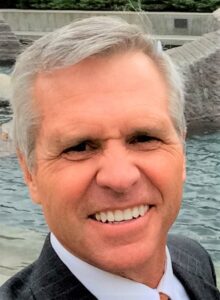
Chris Eskridge
ceskridge@unl.edu
University of Nebraska
Chris Eskridge currently serves as a Professor in the School of Criminology and Criminal Justice at the University of Nebraska. He took his Ph.D. in public administration from Ohio State University in 1978. Prior to his appointment to the faculty at the University of Nebraska in that same year, he worked in the Economic Crime Unit of the Utah Attorney General’s Office, as a Legislative Aide in the Utah House of Representatives, and as an Investigator in the Utah County Attorney’s Office. He also worked in the area of private security and university security, and served as the Assistant to the President of the Lincoln Foundation. He served de-facto and then officially as the Director of the American Society of Criminology for some four+ decades. He has authored/edited four books, given hundreds of professional presentations in numerous international settings and locations, and has 80+ publications. He has served as a Fulbright Scholar/Visiting Professor of Law at Silliman University in the Philippines, as a Fellow/Visiting Professor of Sociology at the University of Canterbury in New Zealand, and as a Research Associate at the U.S. Air Force War College (Maxwell AFB, Alabama). He has also received a number of teaching awards. Professor Eskridge currently serves as the General Editor of the Journal of Contemporary Criminal Justice, and as a member of the editorial/advisory board of nine international journals. He also serves on the Program Council of the International Centre of Criminological Research and Expertise. He served as a delegate to the United Nations Economic and Social Council for many years, and was affiliated with the University of Nebraska Athletic Department’s Strength and Conditioning Program for 45 years. He holds three honorary positions: Research Professor of Law at the University of Central Venezuela in Caracas, Professor of Law at San Martin de Porres University in Lima, Peru, and Honorary Professor of Criminology, Grigol Robakidze University in Tbilisi, Republic of Georgia.
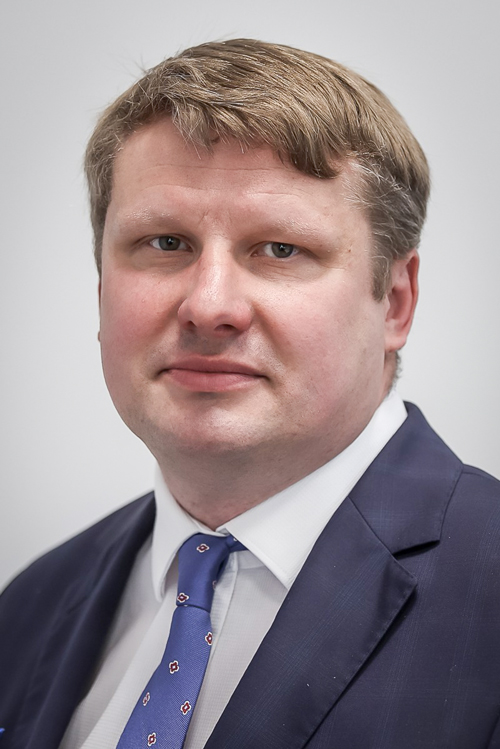 Michal Kaliszan
michal.kaliszan@gumed.edu.pl
Head of the Department of Forensic Medicine, Faculty of Medicine, Medical University of Gdańsk
is actually a head of the Department of Forensic Medicine, Medical University of Gdansk, Poland. His professional activity is focused on forensic pathology, including post mortem examination and vital injuries certification in crime victims. The main area of interest include also the issues regarding the estimation of the time of death and deaths from stab wounds. Actually he continues studies on estimation of the time since death based on eyeball temperature measurements, is an inventor of TOD-meter, device dedicated to calculate the time of death from post mortem eyeball temperature. He is also active in Medical Council in Gdańsk, where in the past he lead Medical Court and actually is engaged in ethical issues.
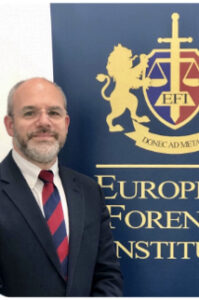 Andreas Melinato
a.melinato@eufor.eu
Head of Institution European Forensic Institute
Andreas Melinato is a Forensic Engineer, fire and explosion investigator, and Head of Institution at the European Forensic Institute (EFI) in Malta. With more than 25 years of experience, he specialises in forensic engineering, fire and explosion investigation, failure analysis, accident reconstruction, anti-counterfeiting. Expert-witness in Court with extensive professional cooperation with national and international law enforcement agencies, forensic consulting and investigative organisations, magistrates, and professional associations.He is an experienced lecturer in forensic engineering, fire and explosion investigation, forensic light sources, and anti-counterfeiting.He is a past President and Honorary Member of the European Association of Arson Investigators, European Chapter of the International Association of Arson Investigators, Vice-President of the European Association of Crime Analysts, and Associate Member of the ENFSI Fire and Explosion Investigation Working Group.
 Sandra Adiarte
Sandra is an internationally trained specialist for structured movement analysis (Laban Movement Analysis, Kestenberg Movement Profile ®) and the analysis of video footage in a forensic context. After a professional career in dance and pedagogy, she started her academic dive into psychology, dance and movement therapy and the behavioural sciences. Currently, Sandra is enrolled as a PhD candidate at the Tactical Research Unit in Health Sciences and Medicine with Bond University, Australia. She investigates the practices of behaviour observation and threat assessment via human observers. Her research and lectures apply interdisciplinary and mixed-method approaches for the training of security, law enforcement, and military personnel with the aim of supporting trainees and professionals in health care and security management through practice-based and field-oriented research.
 Anna Barbaro
a.barbaro@eufor.eu
European Forensic Institute
holds a European PhD in Forensic Genetics and is affiliated with SIMEF Forensic (Italy), the European Forensic Institute (Malta), and the Instituto Universitario de Investigación en Ciencias Policiales (IUICP), Universidad de Alcalá (UAH), Madrid, Spain. She is President of the Worldwide Association of Women Forensic Experts (WAWFE) and Associate Professor and Researcher in Forensic Biology and Genetics. Her main research areas include forensic DNA analysis and genetics, DNA recovery from challenging samples, and the development and application of innovative technologies in forensic science. She supervises doctoral, Master’s, and undergraduate theses and is the author of more than 200 scientific papers and conference presentations, as well as five forensic manuals.
 Joanna Bednarz
joanna.bednarz@ug.edu.pl
Head of the Department of International Business, University of Gdańsk
is an Associate Professor at the Faculty of Economics at the University of Gdansk. She heads the Department of International Business. Her research interests include entrepreneurship, international business, consumption, and the behavior of young consumers. She combines her academic work with her business experience. While working at FMCG companies, she participated in comprehensive new product launches – from identifying customer needs and analyzing market potential to product concept development, project profitability assessment, brand building, and intellectual property protection, and finally to promotional activities and product commercialization. She is involved in the activities of scientific associations: the Polish Economic Society in Gdansk (Head of the Scientific Council), the University of Gdansk Publishing House (member of the council), and the IESE Business School Alumni Association of the University of Navarra. She has extensive international experience collaborating with foreign universities: she is a member of the NICE Network, the coordinator of the Erasmus+ Program at the Faculty of Economics at the University of Gdansk, and a visiting professor at European universities.
Wojciech Branicki
wbranicki@ies.gov.pl
Deputy Director for Scientific Affairs, Institute of Forensic Research in Kraków
Professor Wojciech Branicki is a researcher and lecturer at Jagiellonian University in Kraków and serves as a Vice Director for Science at the Jan Sehn Institute of Forensic Research in Kraków. His research interests focus on the search for new markers and the development of tools useful in the process of human identification, especially on developing DNA-based forensic investigative tools. His early work advanced the field of forensic DNA phenotyping, particularly the prediction of pigmentation traits. His research then expanded to include other physical appearance characteristics, such as age-related phenotypes as well as epigenetic markers. He made a significant contribution to the development of DNA methylation-based models for age estimation in various tissues. His current projects involve whole-genome sequencing to study facial genetics and lifestyle influences on the human methylome.
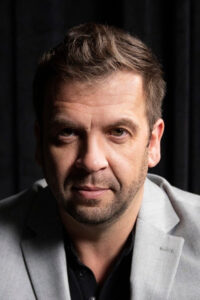
Piotr Chomczyński
piotr.chomczynski@uni.lodz.pl
PhD, Professor at the University of Lodz
is a criminologist, sociologist, and American studies scholar. Since 2015, he has conducted ethnographic fieldwork in Mexico among communities involved in drug trafficking and in correctional facilities. Since 2021, he has been a member of the international research project Crime in Latin America, which conducts criminological research in Honduras, Mexico, Argentina, Chile, Colombia, Bolivia, and Brazil. Since 2025, he has also been a member of an international research project on Child Criminal Exploitation involving researchers from the UK, Norway, Sweden, and the Netherlands. He is the author of articles published in international academic journals on drug-related crime and organised crime in Latin America. He is also a co-editor of the latest Polish criminology textbook, Kryminologia – teoria i praktyka (PWN, 2024). He has served as an expert for U.S. courts in cases involving Latin American criminal organisations
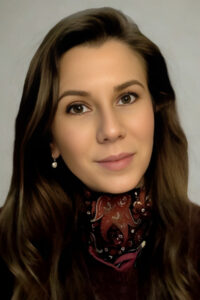
Sarah Crielesi
s.crielesi@eufor.eu
is a multidisciplinary lecturer and researcher specialising in criminology, forensic and criminal psychology, terrorism studies, political violence, international security, and intercultural communication. She is currently a Lecturer in Psychology and Criminology at the European Forensic Institute in Malta and Course Coordinator and Lecturer in International Relations and Criminal-Forensic Communication at SSML in Pisa. Her research examines the psychological, political, and socio-cultural drivers of violent extremism, radicalisation, terrorist ideology, and gender-based violence, with particular interests in online radicalisation, political Islam, and the psychology of ideological movements. Her interdisciplinary expertise brings together criminology and psychology with international relations, conflict studies, linguistics, and intercultural communication. She has extensive international teaching and research experience across the UK, Europe, North Africa, and Turkey, and has contributed to academic conferences, professional training, and counterterrorism initiatives, including consultancy work with UK counterterrorism policing.
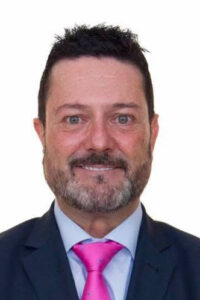
Javier Durán
javierduran@telefonica.net
Former Forensic Analyst at the Criminalistics Service (SECRIM) of the Central Judicial Police Body of the Directorate-General of the Civil Guard, Central Operational Unit (UCO)
Former Forensic Analyst at the Criminalistics Service (SECRIM) of the Central Judicial Police Body of the Directorate-General of the Civil Guard, Central Operational Unit (UCO). Expert in micro-traces, textile fibers, glass, paints and gunshot residues using electron microscopy, Fourier transform infrared spectroscopy, micro spectrophotometry and polarized light microscopy; investigation of road traffic accidents and fires; and crime scene reconstruction and investigation. Dental and Forensic Anthropologist specializing in the identification of bodies following disasters. Assigned to various units under the Central Judicial Police Directorate for the investigation of drug trafficking, human trafficking, terrorism and other offences, as well as serving as a United Nations trainer and conflict resolution specialist.Spokesperson for Institutional Communication (OPC) at the Forensic Science Service of the Directorate-General of the Civil Guard; he currently works in the media as a criminologist, analyst and forensic expert on high-profile cases, appearing on Radio Televisión Española, Telemadrid, Canal Sur, Atresmedia, Mediaset España and other broadcasters. To make sense of the many events he has witnessed and to study the criminal mind, he holds a degree in Criminology and Security Sciences, as well as a Master’s Degree in Criminal Profiling and Crime Analysis. In the field of security, an expert in critical infrastructure as a Security Director, accredited by the General Commissioner’s Office for Private Security of the Directorate-General of Police (T.I.P. 11866). University lecturer in Criminology, Forensic Science, Criminal Profiling and Public Security in Critical Infrastructure at universities including Isabel I International University, the International University of La Rioja (UNIR), Rey Juan Carlos University (ESERP) and the International Institute for Global Security Studies (INISEG). Founding member of the College of Criminology of the Community of Madrid, serving on its first Board of Directors, Registered M-0038. As a police officer, he is a member of the International Police Association (IPA), Spain Section, membership number E-11464, which holds special consultative status with the United Nations, before the Economic and Social Council (ECOSOC), and its technical division collaborates with the United Nations Office on Drugs and Crime (UNODC) on the exchange of police training and security expertise, acting as a consultant and trainer for police forces in Spain and in countries where he is called upon for this role. He is also a member of the Association of Security Directors (ADISPO) and a member of the Advisory Board of the International Association for Security and Civil Protection (AISPIC), carrying out duties as an adviser, consultant and trainer, membership numbers 1061 and T.I.P. 11866. Honorary Member of the International Association of Women Forensic Experts (WAWFE), serving as Coordinator in Spain. Recipient of numerous civil and military honors – including Spanish, international and United Nations awards – as well as prizes, in recognition of his service. Author of university-level teaching materials for textbooks on criminology and criminalistics; collaboration with various authors on numerous academic articles for research journals; and participation in masterclasses and as a speaker at national and international congresses and conferences.
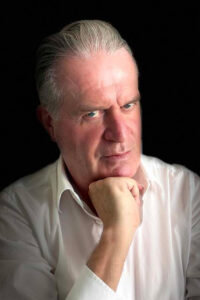
Antonio Incampo
antonio.incampo@uniba.it
University of Bari Aldo Moro
Full Professor of Philosophy of Law in the Department of Law at the University of Bari Aldo Moro. Since 2025, he has served as President of the University of Bari’s Board of Guarantors for the Code of Ethics and as a member of the University’s Guarantee Commission. Former Director of the Department of Criminal Law, Criminal Procedure, and Philosophy of Law, he is also the former President of the degree programs of the Second Faculty of Law at the University of Bari. He currently serves as Editor-in-Chief of a book series and academic journals in legal philosophy. His scholarly work includes numerous publications on the philosophy and semiotics of legal language, the theory of legal validity and judicial discourse, and the ontology of social reality. In 1998, he was awarded the “Grand Decoration of Honor,” conferred by the President of the Republic of Austria in recognition of his contributions to culture.
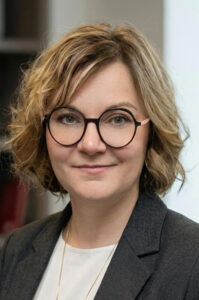
Marcelina Malinowska
marcelina.malinowska@ug.edu.pl
Laboratory of Human Genomics and Genetics, Department of Biology and Medical Genetics, Faculty of Biology, University of Gdańsk
is an Assistant Professor in the Department of Biology and Medical Genetics at the Faculty of Biology, University of Gdańsk, Poland. She holds a PhD in Biological Sciences and has more than ten years of research experience in human genetics, genomics, and molecular biology. Her research explores novel therapeutic strategies and the genetic and epigenetic mechanisms underlying health and disease. Her scientific interests include genetic and epigenetic profiling, genomic data analysis, and the application of advanced molecular biology techniques in biomedical research. She is also interested in the use of genetic and genomic analyses for diagnostic and human identification purposes.
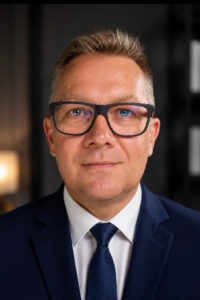
Jacek Potulski
jacek.potulski@prawo.ug.edu.pl
Department of Substantive Criminal Law and Criminology, Faculty of Law and Administration, University of Gdańsk
Jacek Potulski holds a postdoctoral degree in law (habilitation), awarded on 15 April 2019. He is a University Professor in the Department of Substantive Criminal Law and Criminology at the Faculty of Law and Administration, University of Gdańsk, where he also serves as Head of the Criminology Division. He has been employed at the Faculty of Law and Administration of the University of Gdańsk since 2003, initially as an Assistant Lecturer (2003–2005), subsequently as an Assistant Professor (2006–2019), and since 2019 as a University Professor. He teaches courses in criminal law. Legal practice He has practised as an attorney-at-law since 2009. Other professional and academic activities He is a co-author of the LEX Legal Information System and a contributor to the System of Criminal Law published by C.H. Beck. From 2012 to 2017, he served as a member of the Regional Commission for the Adjudication of Medical Events. In 2022–2023, he was a member of the Scientific Council of the United Nations Global Compact Anti-Corruption Programme. He is also a lecturer at the National School of Judiciary and Public Prosecution and served as a member of the Scientific Council of the Institute of Psychiatry and Neurology in Warsaw from 2023 to 2026.
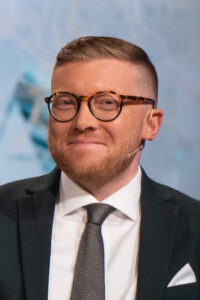
Tomasz Snarski
tomasz.snarski@prawo.ug.edu.pl
Department of Substantive Criminal Law and Criminology, Faculty of Law and Administration, University of Gdańsk
Tomasz Snarski (b. 1985, Gdańsk, Poland) is a Polish lawyer (PhD in Law, advocate), philosopher, poet, publicist and social activist. He is a lecturer (Assistant Professor) at the University of Gdańsk, Department of Substantive Criminal Law and Criminology at the Faculty of Law and Administration.He specializes in criminal law, theory and philosophy of law and human rights.
In recent years, he has authored multiple research publications and books. As a researcher, he works inter alia on criminal law, philosophy of law, and human rights. As far as his philosophical concepts are concerned, he is an author of so called Gdansk’s theory of human rights and notion of the ideal multicultural law. He stands strongly against the capital punishment and any form of death penalty respectively. In recent years, he has been examining the links between the theory of justice and the axiology of mercy in criminal law. He runs a boutique law firm in the centre of Gdańsk. He is also a member of the Committee on Foreign Affairs of the Supreme Bar Council of Poland, and the official delegate of the Polish Bar in The Council of Bars and Laws Societies of Europe (CCBE). He is a chairman of the International Cooperation and Human Rights Committee of the Pomeranian Bar Association. Additionally he works as a human rights activist. Tomasz is a member of the Scientific Council “L’Ircocervo” (First Italian Digital Journal of Legal Methodology, General Theory of Law and the Doctrine of the State). He maintains an active membership of the International Association for Philosophy of Law and Social Philosophy – Polish IVR Section, Society of Polish Scientist in Lithuania, and Gdańsk Scientific Society.
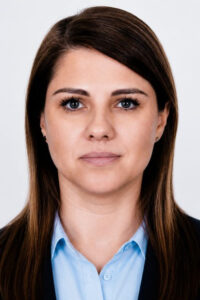
Daria Śmigiel-Kamińska
d.smigiel-kaminska@phdstud.ug.edu.pl
Department of Forensic Science, Faculty of Law and Administration, University of Gdańsk
is a graduate of the University of Gdańsk and a forensic expert in the Chemistry Department of the Central Forensic Laboratory of the Police. Areas of expertise include forensic chemistry, with particular emphasis on narcotics and trace evidence analysis. Scientific activities include authorship and co-authorship of publications in forensic chemistry, particularly on the examination and identification of textile fibers and the application of instrumental analytical methods to forensic evidence. Active involvement in national and international scientific and expert cooperation includes participation in the activities and meetings of the European Network of Forensic Science Institutes (ENFSI). Professional experience combines extensive practical expertise in forensic casework with scientific research and teaching.
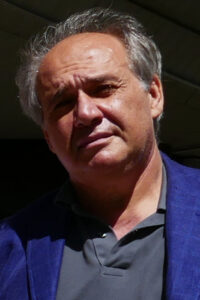
prof. Sabato D’Auria
sabato.dauria@cnr.it
Director of Research at the National Research Council of Italy
Dr. Sabato D’Auria is a Director of Research at the National Research Council of Italy (CNR). He served as the Director of the Institute of Food Science (ISA-CNR) in Avellino from October 2014 to January 2021, and the CNR Department of Biology, Agriculture, and Food Science (CNR-DiSBA) in Rome until 2025 coordinating the activities of nine CNR Institutes across Italy, overseeing more than 900 researchers, technologists, and technical-administrative staff. He is author of about 300 papers. He is also the inventor of multiple national and international patents in the field of biosensors. Dr. D’Auria has been responsible for many national and international research projects. Actually, he leads the Laboratory for Molecular Sensing at ISA-CNR. His main scientific interests are related to the identification and characterization of novel biomolecules to use as stable and specific probes for the design of advanced biosensors.
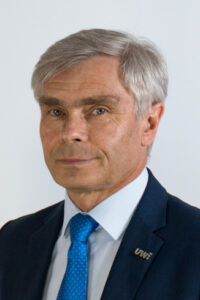
Tadeusz Tomaszewski
tadtom@wpia.uw.edu.pl
Head of the Department of Forensic Science, Faculty of Law and Administration, University of Warsaw
professor of law, full professor at the University of Warsaw, former dean of the Faculty of Law and Administration of the University of Warsaw (2001-2008) and vice-president of this University (2008-2016). He is a long-time chairman of the Scientific Council and vice-president of the Executive Board of the Polish Forensic Society, the chairman of the Scientific Council of the Central Forensic Laboratory of the Police and a member of the advisory committees of the Commander-in-Chief of the Police and the Head of the Central Anticorruption Bureau. Since 2023, he has been the plenipotentiary of the Minister of Justice for court experts and cooperation with expert environment. Author of numerous scientific works devoted to, among others, forensic examination of documents and handwriting, as well as the issues of expert witnesses and their opinions. Since 1996, he has been a court expert in the field of forensics and document examination at the District Court in Warsaw.
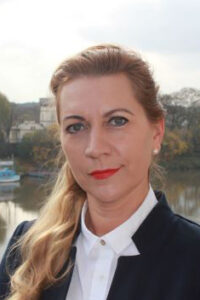
Renata Wietecha-Posłuszny
renata.wietecha-posluszny@uj.edu.pl
Laboratory for Forensic Chemistry, Department of Analytical Chemistry, Faculty of Chemistry, Jagiellonian University in Kraków, Poland
Dr. habil. Renata Wietecha-Posłuszny (Prof. JU), postdoctoral degree, Faculty of Chemistry, Jagiellonian University, Cracow, Poland, specialist in analytical chemistry and forensic toxicology. Head of Forensic Chemistry Specialization at the Faculty of Chemistry, Jagiellonian University, President of the Pro Chemia Foundation, Head of Forensic and Clinical Analysis Team at Faculty of Chemistry, Jagiellonian University. Her scientific interests are focused on developing modern methods dedicated to determination of psychoactive substances and inorganic compounds in various biological matrices by using various analytical methods. Moreover, she deals with the development of innovative analytical methods useful in toxicological and forensic and forensic research. In her research she uses various separation techniques: LC-MS, CE -MS, GC-MS CE-DAD, CE-LIF and spectroscopic: ATR-FTIR, Raman. Her scientific interests are focused on developing modern methods of preparation and analysis of human biological materials, classical and alternative (including VH matrix, bone marrow, hair, etc.), collected ante- and post-mortem, specialist in miniaturization, sensors analysis and green analytical chemistry. She collaborates scientifically, among others, with: Prof. J. Pawliszyn from the University of Waterloo in Canada, Prof. I. Lednev from the State University of New York in Albany, USA, Prof. A. Escarpa from the University of Alcalá, Miniaturization and Analytical Nanotechnology Group, Spain and National Centers, i.e.: Institute of Forensic Research , University of Łódź in the field of: analytical chemistry, green chemistry, miniaturization, innovative toxicological, forensic and clinical research.
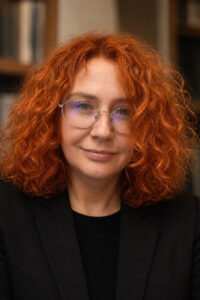
Agnieszka Welento-Nowacka
agnieszka.welento-nowacka@ug.edu.pl
Department of Substantive Criminal Law and Criminology, Faculty of Law and Administration, University of Gdańsk
Agnieszka Welento holds a PhD in medical sciences, awarded by the Institute of Psychiatry and Neurology in Warsaw in 2022. Since 2023, she has been employed as an Assistant Professor in the Department of Substantive Criminal Law and Criminology at the Faculty of Law and Administration, University of Gdańsk. Clinical practice She has been a board-certified specialist in psychiatry since 2011. Since 2013, she has served as Head of a low-security forensic psychiatric ward at the Psychiatric Hospital in Starogard Gdański. Research and professional activities
She is the author and co-author of publications in the field of forensic psychiatry. Her research focuses primarily on violence risk assessment and management. She translated and implemented the Polish versions of the HCR-20 Version 3 and SAPROF violence risk assessment tools.
She is a member of the Executive Board of the Polish Society of Forensic Psychiatry and a member of the Forensic Psychiatry Section of the Polish Psychiatric Association.
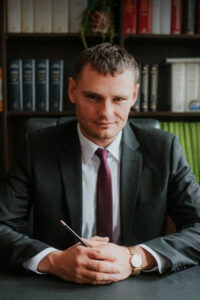
Adrian Wrocławski
adrian.wroclawski@ug.edu.pl
Department of Forensic Science, Faculty of Law and Administration, University of Gdańsk, Director of the Criminalistics Museum at the Faculty of Law and Administration
Dr. Adrian Wrocławski is a lawyer, an assistant professor in the Department of Forensic Research at the Faculty of Law and Administration at the University of Gdańsk, and the Director of the Museum of Criminalistics. In his legal practice, he specializes in criminal law and fiscal penal law, providing legal counsel to both individuals and business entities. He also serves as a court-appointed expert in firearms and ballistics for the Regional Court in Gdańsk. His academic work focuses on serial homicide, the use of dangerous objects, ballistics, and forensic medicine. He is the author of a monograph dedicated to the case of Paweł Tuchlin (known as „Scorpion”). He has appeared as an expert on British and Polish documentary series, such as “World’s Most Evil Killers” and “Kryminalne śledztwa PRL”, and co-developed the „Virtual Crime Scene” VR application for crime-scene investigation training in collaboration with Asseco Data Systems.
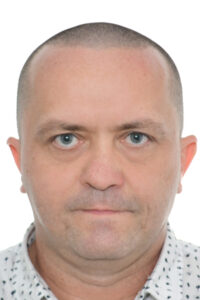
Grzegorz Zadora
gzadora@ies.gov.pl
Head of the Microtrace Analysis Laboratory, Institute of Forensic Research in Kraków
Professor Grzegorz Zadora scientific and professional career has been devoted to forensic chemistry, mainly at the Jan Sehn Institute of Forensic Research in Kraków, where he has worked since 2001 and currently holds the position of professor. Since 2005, he has served as an expert in physicochemical analysis of microtraces, and since 2013 also in bloodstain pattern analysis. He is also a part-time professor at the Institute of Chemistry, University of Silesia in Katowice, where he co-developed the forensic chemistry specialization. His research focuses on the interpretation of forensic data for the justice system and law enforcement, particularly using likelihood ratio methods. He has authored over 50 impact-factor journal articles, more than 40 book chapters, and co-authored a Wiley monograph on LR models, now recommended in the ISO 21043 standard series. Professor Zadora has been included in the Stanford/Elsevier World’s Top 2% Scientists ranking.
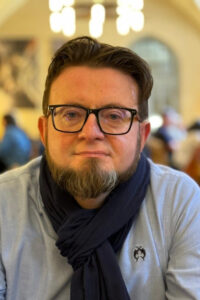
Wojciech Zalewski
wojciech.zalewski@ug.edu.pl
Head of the Department of Substantive Criminal Law and Criminology, Faculty of Law and Administration, University of Gdańsk, Dean of the Faculty of Law and Administration
Wojciech Zalewski, PhD habil., is Professor of Criminal Law and Criminology and Dean of the Faculty of Law and Administration at the University of Gdańsk, Poland. He also heads the Department of Substantive Criminal Law and Criminology. His research focuses on criminal law, criminology, victimology, criminal policy, restorative justice, penal populism and the philosophy of punishment.
He is the author and editor of numerous publications, including monographs on restorative justice and criminal-policy responses to persistent offenders. His current research explores evidence-based criminology, the limits of punishment, penal abolitionism, the preventive turn in criminal justice, and the impact of artificial intelligence and new technologies on crime control and judicial decision-making.
Professor Zalewski has participated in numerous international research projects and conferences and has cooperated with judicial institutions, professional bodies and non-governmental organisations. He is a former member of the Board of Governors of the International Association of Law Schools and is active in international criminological and legal-academic networks.He also serves as an external examiner at the University of Mauritius in the fields of law and criminology, evaluating course examinations as well as bachelor’s and master’s dissertations.
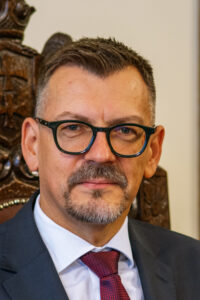
dr hab. Sławomir Steinborn, prof. UG
slawomir.steinborn@ug.edu.pl
Department of Criminal Procedure and Criminalistics, Faculty of Law and Administration.
is a professor of Criminal Procedure and European Criminal Law at the University of Gdańsk (Poland), head of the Department of Criminal Procedure Law and Criminalistics at the Faculty of Law and Administration. He did his research in Max Planck Institute for Foreign and International Criminal Law in Freiburg i. Br., Germany: from April 2008 till June 2009 as a fellow of Alexander von Humboldt Foundation and in August 2015 as a fellow of Max Planck Society. Since 2016 he serves as a judge at Court of Appeal in Gdansk, in March 2025 he was appointed President of the Court for a six-year term. In April 2024 he was nominated by the Prime Minister to the Commission of the Criminal Law Codification by the Polish Ministry of Justice (he was also member of this Commission in 2013-2016). He is author and co-author of over 150 scientific publications (in Polish, German and English), as well as author of more than 20 expertise’s prepared for the Polish Parliament, Polish Ministry of Justice, Polish Ministry of Foreign Affairs and Council of Europe. He has also been involved in numerous domestic and European research projects. He is member of Polish group of AIDP, member of the Scientific Committee of the AIDP (elected in June 2025) and member of European Criminal Policy Initiative. His fields of interest include criminal law and procedure, international cooperation in criminal matters, European criminal law (esp. harmonisation of criminal law and procedure, judicial cooperation) and criminal aspects of constitutional law.