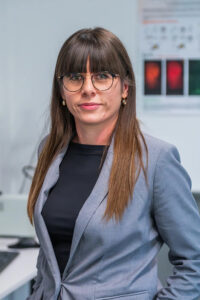
dr hab. inż. Aneta Lewkowicz, prof. UG
aneta.lewkowicz@ug.edu.pl
Head of the Forensic Science Department, Faculty of Law and Administration, University of Gdańsk
Professor at the University of Gdańsk and Head of the Department of Forensic Research at the Faculty of Law and Administration, with an interdisciplinary background spanning chemistry and physics, enabling the integration of these fields in research in unique ways. Actively involved in the university’s academic governance, serving on the Council of the Physical Sciences Discipline at the Faculty of Mathematics, Physics and Informatics, as well as on the Council of the Faculty of Law and Administration. Extensive experience includes leading and coordinating interdisciplinary research groups, managing prestigious grants, and holding patents on modern methods of trace evidence identification. Within the project, responsible for managing expert teams and designing innovative methodologies that apply the exact sciences to forensic science.

Małgorzata Oliwia Sobczak
Piotr Chomczyński
piotr.chomczynski@uni.lodz.pl
PhD, Professor at the University of Lodz
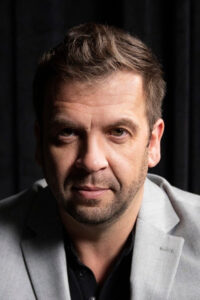
is a criminologist, sociologist, and American studies scholar. Since 2015, he has conducted ethnographic fieldwork in Mexico among communities involved in drug trafficking and in correctional facilities. Since 2021, he has been a member of the international research project Crime in Latin America, which conducts criminological research in Honduras, Mexico, Argentina, Chile, Colombia, Bolivia, and Brazil. Since 2025, he has also been a member of an international research project on Child Criminal Exploitation involving researchers from the UK, Norway, Sweden, and the Netherlands. He is the author of articles published in international academic journals on drug-related crime and organised crime in Latin America. He is also a co-editor of the latest Polish criminology textbook, Kryminologia – teoria i praktyka (PWN, 2024). He has served as an expert for U.S. courts in cases involving Latin American criminal organisations
Wojciech Branicki
wbranicki@ies.gov.pl
Deputy Director for Scientific Affairs, Institute of Forensic Research in Kraków
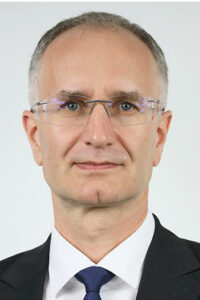
Professor Wojciech Branicki is a researcher and lecturer at Jagiellonian University in Kraków and serves as a Vice Director for Science at the Jan Sehn Institute of Forensic Research in Kraków. His research interests focus on the search for new markers and the development of tools useful in the process of human identification, especially on developing DNA-based forensic investigative tools. His early work advanced the field of forensic DNA phenotyping, particularly the prediction of pigmentation traits. His research then expanded to include other physical appearance characteristics, such as age-related phenotypes as well as epigenetic markers. He made a significant contribution to the development of DNA methylation-based models for age estimation in various tissues. His current projects involve whole-genome sequencing to study facial genetics and lifestyle influences on the human methylome.
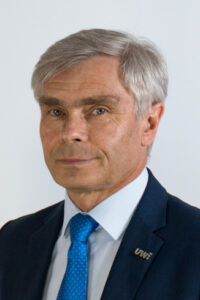
Tadeusz Tomaszewski
tadtom@wpia.uw.edu.pl
Head of the Department of Forensic Science, Faculty of Law and Administration, University of Warsaw
professor of law, full professor at the University of Warsaw, former dean of the Faculty of Law and Administration of the University of Warsaw (2001-2008) and vice-president of this University (2008-2016). He is a long-time chairman of the Scientific Council and vice-president of the Executive Board of the Polish Forensic Society, the chairman of the Scientific Council of the Central Forensic Laboratory of the Police and a member of the advisory committees of the Commander-in-Chief of the Police and the Head of the Central Anticorruption Bureau. Since 2023, he has been the plenipotentiary of the Minister of Justice for court experts and cooperation with expert environment. Author of numerous scientific works devoted to, among others, forensic examination of documents and handwriting, as well as the issues of expert witnesses and their opinions. Since 1996, he has been a court expert in the field of forensics and document examination at the District Court in Warsaw.
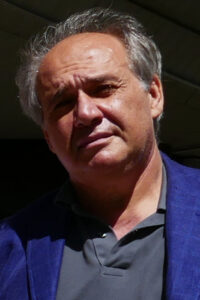
prof. Sabato D’Auria
sabato.dauria@cnr.it
Director of Research at the National Research Council of Italy
Dr. Sabato D’Auria is a Director of Research at the National Research Council of Italy (CNR). He served as the Director of the Institute of Food Science (ISA-CNR) in Avellino from October 2014 to January 2021, and the CNR Department of Biology, Agriculture, and Food Science (CNR-DiSBA) in Rome until 2025 coordinating the activities of nine CNR Institutes across Italy, overseeing more than 900 researchers, technologists, and technical-administrative staff. He is author of about 300 papers. He is also the inventor of multiple national and international patents in the field of biosensors. Dr. D’Auria has been responsible for many national and international research projects. Actually, he leads the Laboratory for Molecular Sensing at ISA-CNR. His main scientific interests are related to the identification and characterization of novel biomolecules to use as stable and specific probes for the design of advanced biosensors.
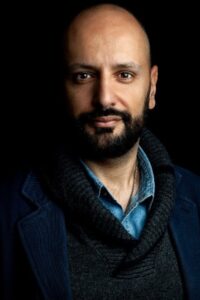
Pier Matteo Barone
p.barone@aur.edu
Associate Professor of Archaeology The American University of Rome
is Associate Professor of Archaeology at The American University of Rome and a forensic geoarchaeologist specializing in the application of archaeological and geoscientific methods to crime-scene investigation and searches for missing persons. His work integrates forensic archaeology, ground-penetrating radar and other geophysical methods, GIS, UAV and satellite remote sensing, photogrammetry, and digital workflows for the detection, documentation, and interpretation of buried or otherwise concealed evidence. He is Chair of the Forensic Archaeology subgroup within the ENFSI Scene of Crime Working Group and contributes to international research, training, and operational activities in forensic geoscience. His current interests include multimodal data integration, remote sensing for search prioritization, quality assurance in forensic archaeology, and the responsible use of AI-assisted tools in forensic decision support.
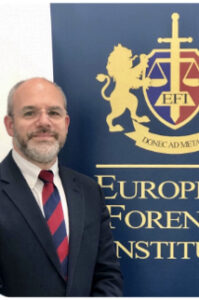 Andreas Melinato
a.melinato@eufor.eu
Head of Institution European Forensic Institute
Andreas Melinato is a Forensic Engineer, fire and explosion investigator, and Head of Institution at the European Forensic Institute (EFI) in Malta. With more than 25 years of experience, he specialises in forensic engineering, fire and explosion investigation, failure analysis, accident reconstruction, anti-counterfeiting. Expert-witness in Court with extensive professional cooperation with national and international law enforcement agencies, forensic consulting and investigative organisations, magistrates, and professional associations.He is an experienced lecturer in forensic engineering, fire and explosion investigation, forensic light sources, and anti-counterfeiting.He is a past President and Honorary Member of the European Association of Arson Investigators, European Chapter of the International Association of Arson Investigators, Vice-President of the European Association of Crime Analysts, and Associate Member of the ENFSI Fire and Explosion Investigation Working Group.
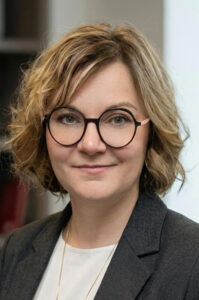
dr Marcelina Malinowska
marcelina.malinowska@ug.edu.pl
Laboratory of Human Genomics and Genetics, Department of Biology and Medical Genetics, Faculty of Biology, University of Gdańsk
is an Assistant Professor in the Department of Biology and Medical Genetics at the Faculty of Biology, University of Gdańsk, Poland. She holds a PhD in Biological Sciences and has more than ten years of research experience in human genetics, genomics, and molecular biology. Her research explores novel therapeutic strategies and the genetic and epigenetic mechanisms underlying health and disease. Her scientific interests include genetic and epigenetic profiling, genomic data analysis, and the application of advanced molecular biology techniques in biomedical research. She is also interested in the use of genetic and genomic analyses for diagnostic and human identification purposes.