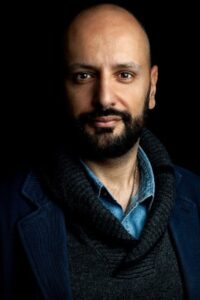
Pier Matteo Barone
Associate Professor of Archaeology
The American University of Rome
is Associate Professor of Archaeology at The American University of Rome and a forensic geoarchaeologist specializing in the application of archaeological and geoscientific methods to crime-scene investigation and searches for missing persons. His work integrates forensic archaeology, ground-penetrating radar and other geophysical methods, GIS, UAV and satellite remote sensing, photogrammetry, and digital workflows for the detection, documentation, and interpretation of buried or otherwise concealed evidence. He is Chair of the Forensic Archaeology subgroup within the ENFSI Scene of Crime Working Group and contributes to international research, training, and operational activities in forensic geoscience. His current interests include multimodal data integration, remote sensing for search prioritization, quality assurance in forensic archaeology, and the responsible use of AI-assisted tools in forensic decision support.
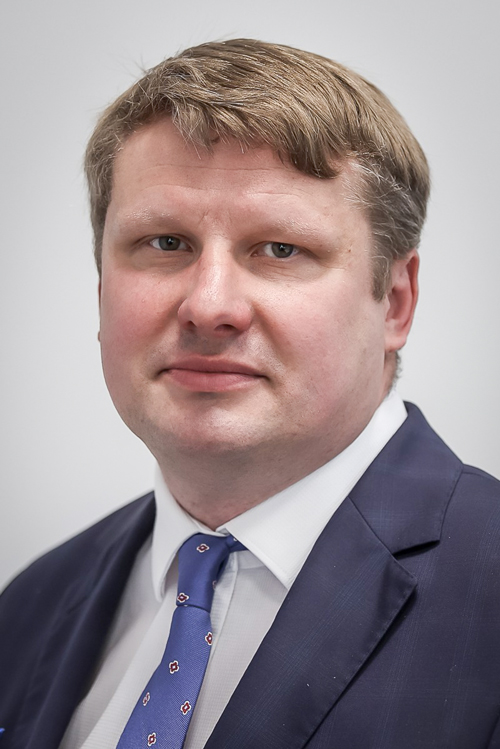 Michal Kaliszan
Head of the Department of Forensic Medicine, Faculty of Medicine, Medical University of Gdańsk
is actually a head of the Department of Forensic Medicine, Medical University of Gdansk, Poland. His professional activity is focused on forensic pathology, including post mortem examination and vital injuries certification in crime victims. The main area of interest include also the issues regarding the estimation of the time of death and deaths from stab wounds. Actually he continues studies on estimation of the time since death based on eyeball temperature measurements, is an inventor of TOD-meter, device dedicated to calculate the time of death from post mortem eyeball temperature. He is also active in Medical Council in Gdańsk, where in the past he lead Medical Court and actually is engaged in ethical issues.
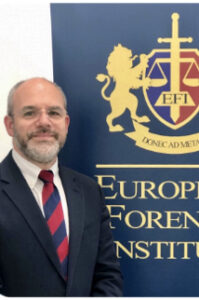 Andreas Melinato
Head of Institution
European Forensic Institute
Malta
Andreas Melinato is a Forensic Engineer, fire and explosion investigator, and Head of Institution at the European Forensic Institute (EFI) in Malta. With more than 25 years of experience, he specialises in forensic engineering, fire and explosion investigation, failure analysis, accident reconstruction, anti-counterfeiting. Expert-witness in Court with extensive professional cooperation with national and international law enforcement agencies, forensic consulting and investigative organisations, magistrates, and professional associations.He is an experienced lecturer in forensic engineering, fire and explosion investigation, forensic light sources, and anti-counterfeiting.He is a past President and Honorary Member of the European Association of Arson Investigators, European Chapter of the International Association of Arson Investigators, Vice-President of the European Association of Crime Analysts, and Associate Member of the ENFSI Fire and Explosion Investigation Working Group.
 Anna Barbaro
holds a European PhD in Forensic Genetics and is affiliated with SIMEF Forensic (Italy), the European Forensic Institute (Malta), and the Instituto Universitario de Investigación en Ciencias Policiales (IUICP), Universidad de Alcalá (UAH), Madrid, Spain. She is President of the Worldwide Association of Women Forensic Experts (WAWFE) and Associate Professor and Researcher in Forensic Biology and Genetics. Her main research areas include forensic DNA analysis and genetics, DNA recovery from challenging samples, and the development and application of innovative technologies in forensic science. She supervises doctoral, Master’s, and undergraduate theses and is the author of more than 200 scientific papers and conference presentations, as well as five forensic manuals.
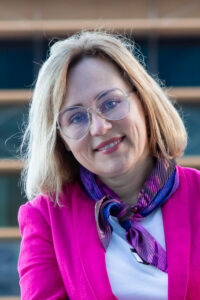 Joanna Bednarz
is an Associate Professor at the Faculty of Economics at the University of Gdansk. She heads the Department of International Business. Her research interests include entrepreneurship, international business, consumption, and the behavior of young consumers.
She combines her academic work with her business experience. While working at FMCG companies, she participated in comprehensive new product launches – from identifying customer needs and analyzing market potential to product concept development, project profitability assessment, brand building, and intellectual property protection, and finally to promotional activities and product commercialization. She is involved in the activities of scientific associations: the Polish Economic Society in Gdansk (Head of the Scientific Council), the University of Gdansk Publishing House (member of the council), and the IESE Business School Alumni Association of the University of Navarra. She has extensive international experience collaborating with foreign universities: she is a member of the NICE Network, the coordinator of the Erasmus+ Program at the Faculty of Economics at the University of Gdansk, and a visiting professor at European universities.
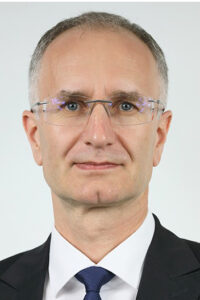
Wojciech Branicki
Professor Wojciech Branicki is a researcher and lecturer at Jagiellonian University in Kraków and serves as a Vice Director for Science at the Jan Sehn Institute of Forensic Research in Kraków. His research interests focus on the search for new markers and the development of tools useful in the process of human identification, especially on developing DNA-based forensic investigative tools. His early work advanced the field of forensic DNA phenotyping, particularly the prediction of pigmentation traits. His research then expanded to include other physical appearance characteristics, such as age-related phenotypes as well as epigenetic markers. He made a significant contribution to the development of DNA methylation-based models for age estimation in various tissues. His current projects involve whole-genome sequencing to study facial genetics and lifestyle influences on the human methylome.
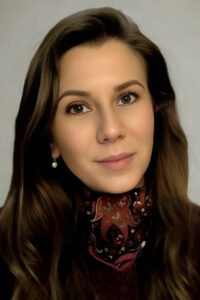
Sarah Crielesi
is a multidisciplinary lecturer and researcher specialising in criminology, forensic and criminal psychology, terrorism studies, political violence, international security, and intercultural communication. She is currently a Lecturer in Psychology and Criminology at the European Forensic Institute in Malta and Course Coordinator and Lecturer in International Relations and Criminal-Forensic Communication at SSML in Pisa. Her research examines the psychological, political, and socio-cultural drivers of violent extremism, radicalisation, terrorist ideology, and gender-based violence, with particular interests in online radicalisation, political Islam, and the psychology of ideological movements. Her interdisciplinary expertise brings together criminology and psychology with international relations, conflict studies, linguistics, and intercultural communication. She has extensive international teaching and research experience across the UK, Europe, North Africa, and Turkey, and has contributed to academic conferences, professional training, and counterterrorism initiatives, including consultancy work with UK counterterrorism policing.
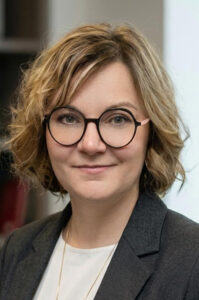
Marcelina Malinowska
Laboratory of Human Genomics and Genetics, Department of Biology and Medical Genetics, Faculty of Biology, University of Gdańsk
is an Assistant Professor in the Department of Biology and Medical Genetics at the Faculty of Biology, University of Gdańsk, Poland. She holds a PhD in Biological Sciences and has more than ten years of research experience in human genetics, genomics, and molecular biology. Her research explores novel therapeutic strategies and the genetic and epigenetic mechanisms underlying health and disease. Her scientific interests include genetic and epigenetic profiling, genomic data analysis, and the application of advanced molecular biology techniques in biomedical research. She is also interested in the use of genetic and genomic analyses for diagnostic and human identification purposes.
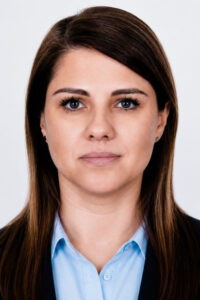
Daria Śmigiel-Kamińska
Court expert in the field of microtraces
is a graduate of the University of Gdańsk and a forensic expert in the Chemical Department of the Central Forensic Laboratory of the Police. Areas of expertise include forensic chemistry, with particular emphasis on narcotics and trace evidence analysis. Scientific activities include authorship and co-authorship of publications in forensic chemistry, particularly on the examination and identification of textile fibers and the application of instrumental analytical methods to forensic evidence. Active involvement in national and international scientific and expert cooperation includes participation in the activities and meetings of the European Network of Forensic Science Institutes (ENFSI). Professional experience combines extensive practical expertise in forensic casework with scientific research and teaching.
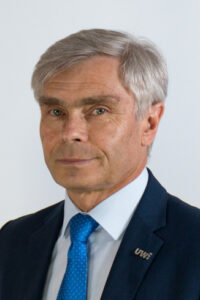
Tadeusz Tomaszewski
professor of law, full professor at the University of Warsaw, former dean of the Faculty of Law and Administration of the University of Warsaw (2001-2008) and vice-president of this University (2008-2016). He is a long-time chairman of the Scientific Council and vice-president of the Executive Board of the Polish Forensic Society, the chairman of the Scientific Council of the Central Forensic Laboratory of the Police and a member of the advisory committees of the Commander-in-Chief of the Police and the Head of the Central Anticorruption Bureau. Since 2023, he has been the plenipotentiary of the Minister of Justice for court experts and cooperation with expert environment. Author of numerous scientific works devoted to, among others, forensic examination of documents and handwriting, as well as the issues of expert witnesses and their opinions. Since 1996, he has been a court expert in the field of forensics and document examination at the District Court in Warsaw.
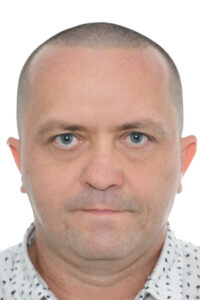
Grzegorz Zadora
Director of the Institute of Forensic Research in Krakow
Professor Grzegorz Zadora scientific and professional career has been devoted to forensic chemistry, mainly at the Jan Sehn Institute of Forensic Research in Kraków, where he has worked since 2001 and currently holds the position of professor. Since 2005, he has served as an expert in physicochemical analysis of microtraces, and since 2013 also in bloodstain pattern analysis. He is also a part-time professor at the Institute of Chemistry, University of Silesia in Katowice, where he co-developed the forensic chemistry specialization. His research focuses on the interpretation of forensic data for the justice system and law enforcement, particularly using likelihood ratio methods. He has authored over 50 impact-factor journal articles, more than 40 book chapters, and co-authored a Wiley monograph on LR models, now recommended in the ISO 21043 standard series. Professor Zadora has been included in the Stanford/Elsevier World’s Top 2% Scientists ranking.
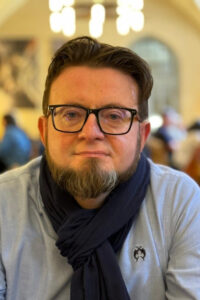
Wojciech Zalewski
wojciech.zalewski@ug.edu.pl
Head of the Department of Substantive Criminal Law and Criminology, Faculty of Law and Administration, University of Gdańsk, Dean of the Faculty of Law and Administration
Wojciech Zalewski, PhD habil., is Professor of Criminal Law and Criminology and Dean of the Faculty of Law and Administration at the University of Gdańsk, Poland. He also heads the Department of Substantive Criminal Law and Criminology. His research focuses on criminal law, criminology, victimology, criminal policy, restorative justice, penal populism and the philosophy of punishment.
He is the author and editor of numerous publications, including monographs on restorative justice and criminal-policy responses to persistent offenders. His current research explores evidence-based criminology, the limits of punishment, penal abolitionism, the preventive turn in criminal justice, and the impact of artificial intelligence and new technologies on crime control and judicial decision-making.
Professor Zalewski has participated in numerous international research projects and conferences and has cooperated with judicial institutions, professional bodies and non-governmental organisations. He is a former member of the Board of Governors of the International Association of Law Schools and is active in international criminological and legal-academic networks.He also serves as an external examiner at the University of Mauritius in the fields of law and criminology, evaluating course examinations as well as bachelor’s and master’s dissertations.